
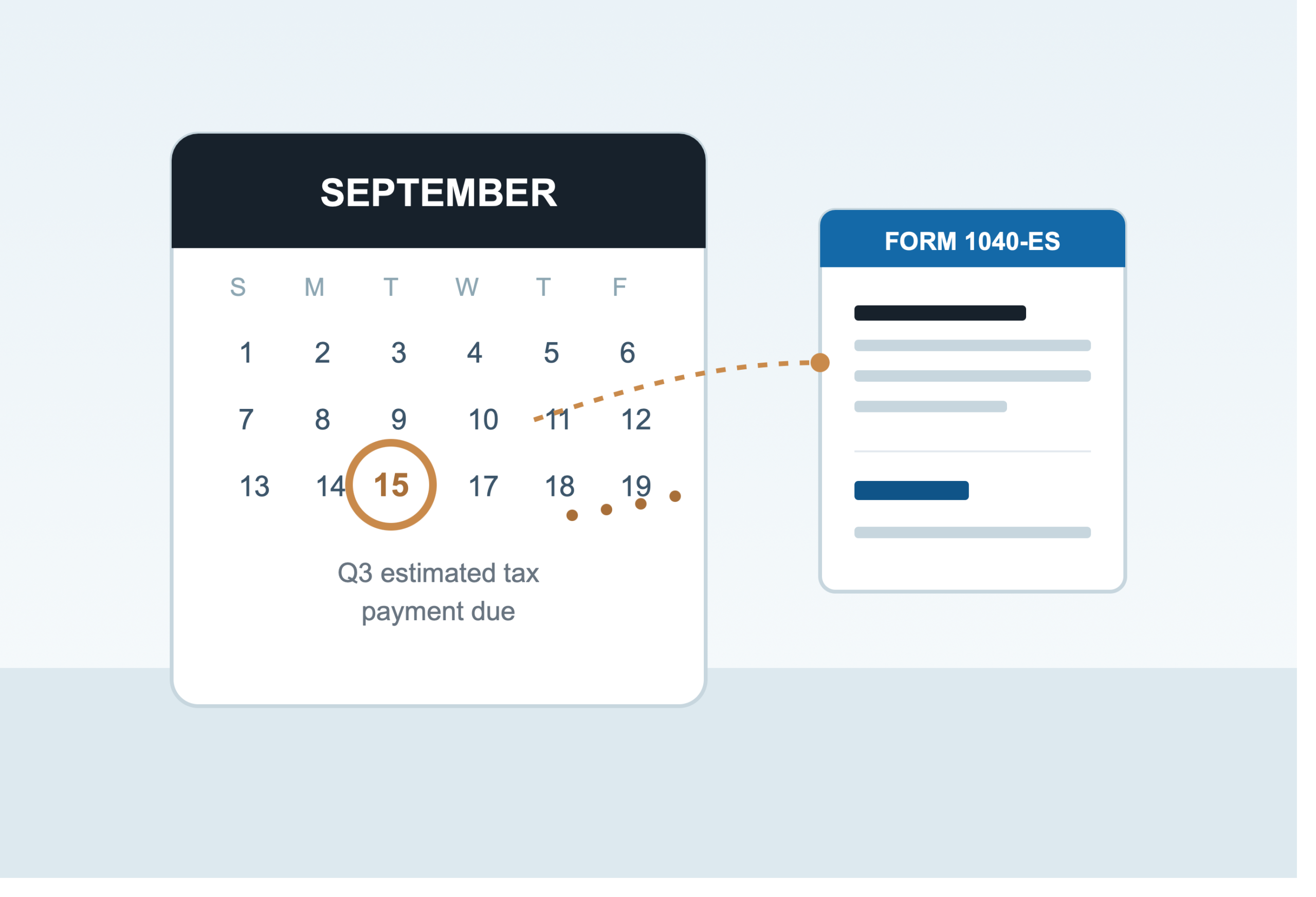
If today — September 15, 2026 — came and went without your third-quarter estimated tax payment, nothing catastrophic happens immediately. The clock on a penalty does start running the moment the deadline passes, though. The fix is almost always the same: pay what you owe as soon as you can. The penalty grows based on how much you owed and how many days it stayed unpaid, not on the fact that you missed the date itself. The longer you wait, the more it grows. Paying tomorrow costs meaningfully less than paying in three weeks.
The Short Answer
Missing a quarterly estimated tax deadline generally triggers an underpayment penalty. The IRS calculates it on the amount you should have paid by that date, for each day it remains unpaid, at an interest rate it sets and adjusts quarterly. There’s no separate “late filing” penalty specific to missing a quarterly deadline. That’s a different mechanism tied to missing your annual return — this is interest on an underpayment, not a flat fine. Pay the missed amount as soon as possible. Depending on your situation, a safe harbor rule might mean you owe little or no penalty at all, even after missing today’s date.
Why This Deadline Exists in the First Place
The federal tax system runs on a pay-as-you-go basis. If you’re self-employed, freelancing, or running gig income without withholding, quarterly estimated payments are how you’re expected to pay tax as you earn it. That’s the alternative to paying it all at once the following April. For 2026, the four due dates are April 15, June 15, September 15, and January 15, 2027. Today is the third of those four checkpoints for the year. EarnerLedger’s guide to paying quarterly estimated taxes covers the full system in depth.
What the Penalty Actually Is
The underpayment penalty isn’t a flat fee for being late. It’s interest, calculated on the specific amount you underpaid, for the specific number of days it stayed unpaid. The IRS sets that rate and reviews it every quarter. The rate changes periodically. Check the current figure directly on IRS.gov rather than assuming last quarter’s rate still applies — this article isn’t the place to guess at a number that shifts.
Practically, this means two things. First, the penalty is proportional. A missed $500 payment caught up in a week costs far less than a missed $5,000 payment left unpaid for two months. Second, there’s no cliff-edge moment where things suddenly get dramatically worse a specific number of days after the deadline. The cost simply accumulates the longer the balance sits unpaid.
Does Missing Today Mean You Have to Wait Until January?
No. If you missed today’s September 15 deadline, pay the amount now. Don’t wait for the January 15 payment to “catch up” everything at once. Paying late is better than paying later, because the penalty calculation runs on days elapsed since the missed due date — every day you wait adds to what you’ll eventually owe. EarnerLedger’s guide to calculating self-employment tax can help you pin down the exact amount you still owe.
The Safe Harbor Rule Can Still Protect You
This is the part most people don’t realize applies to them. You’re generally protected from an underpayment penalty for the year if your total withholding and estimated payments equal at least one of two thresholds. The first: 90% of your current year’s total tax. The second: 100% of your prior year’s tax. That second figure rises to 110% if your prior-year adjusted gross income was over $150,000, or $75,000 if married filing separately.
Safe harbor determines the total amount you need to have paid across the year — it doesn’t erase a penalty for paying a specific installment late. Say you’re on track to meet the safe harbor threshold overall, but you paid one quarter’s installment after its due date. You can still owe a small penalty for that specific period between the due date and when you actually paid, even though your total for the year ends up sufficient. The safe harbor keeps the overall required amount from spiraling upward with a strong current year. It doesn’t retroactively excuse a late installment.
A Worked Example: Missing Q3 With Irregular Income
Say a freelance designer owed $9,000 in total tax last year. Her adjusted gross income was under $150,000. Under the 100% prior-year safe harbor, she needs to pay $9,000 across 2026’s four estimated payments to be fully protected — $2,250 per quarter if paid evenly.
She paid the April and June installments on time. Her third quarter was busier than usual, and September 15 passed without the $2,250 payment going out. She catches it three weeks later and pays the full $2,250 on October 6.
Here’s what happens: that specific $2,250 installment was late by 21 days. The IRS calculates a penalty on that amount for those 21 days, at whatever the current quarterly rate is. That’s a real but generally modest cost for a three-week delay, not a dramatic one. Her April and June payments were on time, and she’s on pace to hit her $9,000 safe harbor total for the year once the January payment goes out. That means she isn’t facing a runaway penalty on her full annual tax bill — just the cost tied to that one late installment. This is a simplified illustration. The exact dollar amount depends on the current IRS rate, which changes quarterly and should be confirmed directly on IRS.gov rather than assumed from this example.
What If You Can’t Pay the Full Amount Right Now?
Pay what you can today rather than waiting until you have the full amount. The penalty calculation runs on the unpaid balance — paying half now and half in two weeks generates less penalty than paying nothing until you have it all. A larger cash flow problem calls for a different tool: the IRS offers payment plans separate from the estimated tax penalty itself. That’s worth exploring directly with the IRS or a tax professional rather than simply avoiding the payment altogether.
Does This Affect Your January Payment Too?
No — each quarterly installment gets evaluated on its own timeline for penalty purposes. Catching up on a missed September payment doesn’t change what you owe for the January 15 installment. That payment still needs to reflect its own quarter’s share of your total estimated liability, calculated the normal way. EarnerLedger’s guide to budgeting with irregular income is worth revisiting if inconsistent income is part of why a payment got missed in the first place.
Common Mistakes
- Waiting until the next quarter to “combine” a missed payment with the following one. This only lets the penalty on the missed amount keep growing in the meantime.
- Assuming a missed payment means a dramatic, one-time penalty rather than accumulating daily interest.Paying sooner genuinely reduces the cost.
- Not checking whether safe harbor already protects you overall, and panicking about a bigger annual liability than what’s actually at stake.
- Assuming the current quarter’s interest rate matches a previous quarter’s rate. The IRS adjusts this periodically. Using an outdated figure can mean under- or overestimating what a missed payment actually costs.
Frequently Asked Questions
What happens if I miss today’s quarterly tax deadline? An underpayment penalty generally starts accruing on the missed amount. The IRS calculates it daily, at its current quarterly interest rate, until you pay. Paying as soon as possible limits how much it grows.
Is there a separate late-filing penalty for missing a quarterly payment? No. This is interest on an underpayment, not the same kind of flat penalty associated with missing your annual tax return filing deadline.
Can safe harbor protect me even though I missed today’s payment? It can protect your overall annual liability from exceeding the safe harbor threshold. It generally doesn’t erase a penalty tied to one specific installment paid after its due date.
Should I wait and pay double at the next quarterly deadline? No. Pay the missed amount as soon as you can rather than waiting — the penalty accumulates based on days unpaid, so earlier is always better than later.
Where do I find the current IRS underpayment interest rate? Directly on IRS.gov. The rate gets reviewed and can change each quarter. Using an old rate from a previous quarter can give you an inaccurate estimate of what a late payment actually costs.
Bottom Line
Missing today’s quarterly estimated tax deadline isn’t the financial emergency it can feel like in the moment. The cost gets calculated as interest on the specific amount and the specific number of days it stays unpaid — not a flat penalty triggered by the date itself. Safe harbor rules may already be protecting your overall annual liability even after a late installment. The single most useful thing to do right now is pay the missed amount as soon as you’re able, rather than waiting for the next deadline to “catch up” everything at once.
This article is for general educational purposes and reflects federal tax guidance in effect for the 2026 tax year at the time of writing. It is not individualized tax advice. Consult a CPA, enrolled agent, or other qualified tax professional for guidance specific to your situation.
Official Sources
- IRS — Estimated Taxes (irs.gov/businesses/small-businesses-self-employed/estimated-taxes)
- IRS — 2026 Form 1040-ES, Estimated Tax for Individuals (quarterly due dates, $1,000 threshold, safe harbor rules)
- IRS — Underpayment of Estimated Tax by Individuals Penalty (irs.gov/payments/underpayment-of-estimated-tax-by-individuals-penalty) — penalty calculation mechanics and quarterly interest rate
- IRS — Form 2210, Underpayment of Estimated Tax by Individuals, Estates, and Trusts